
Tag: #Nanomaterial
Articles tagged with #Nanomaterial
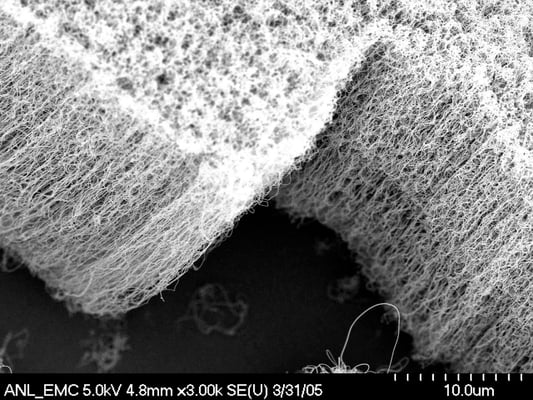
Synthesis of Carbon Nanotubes
Image: Argonne National Laboratory 12Using arc discharge evaporation method, S. Iijima in 1991 reported a preparation of new type of finite…
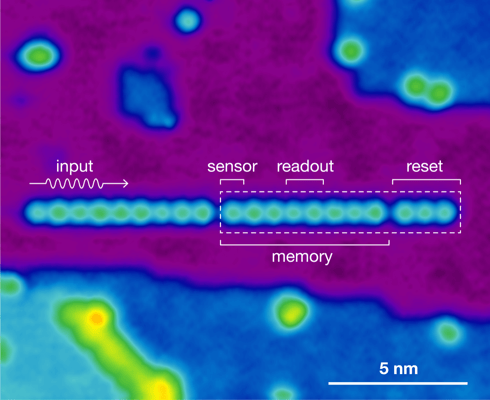
Sensor Consisting of Only 11 Atoms
The designed 11-atom sensor contains a minuscule device with an antenna, a reset button, a hard disk, a reading screen, and is capable to capture the magnetic waves.

3D Images of Nanoparticles With Unprecedented Precision
SINGLE uses in situ TEM imaging of platinum nanocrystals freely rotating in a graphene liquid cell to determine the 3D structures of individual colloidal nanoparticles.

New Photon-Counting Camera Captured 3D Images with Record Speed and Resolution
To overcome the limitations of the image sensors, a team of researchers from Advanced Quantum Architecture Laboratory (AQUA), Ecole polytechnique fédérale de Lausanne (EPFL), and Device Research & Design Department, Canon Inc. devised a new time-gating approach that entails only less than eight transistors.
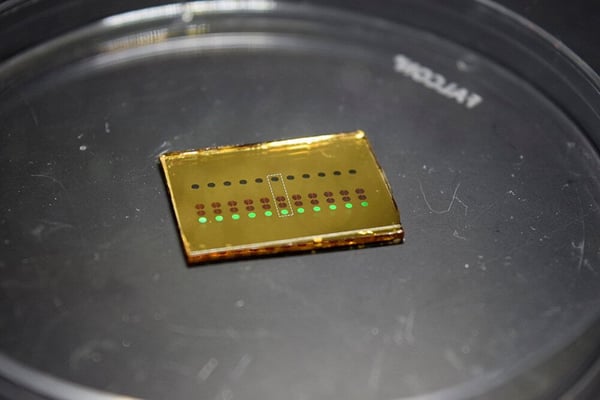
New Optical System Manipulate Light Completely in New Way
Researchers from California Institute of Technology (Caltech), have introduced the concept of folded metasurface optics by demonstrating a compact spectrometer made a glass slab.
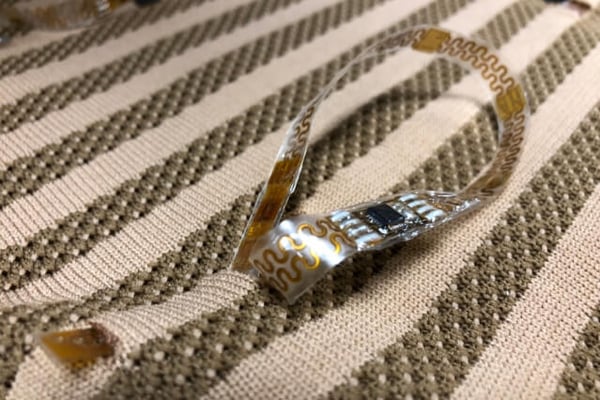
Smart Textile Remotely Monitors Vital Signs
MIT researchers developed a new technique to fabricate electronics into textiles and claimed that those smart textiles have properties like flexible, washable, durable, and also comfortable.

Single Layer of Carbon Atoms Can Boost Gigahertz Signals to Terahertz Frequencies
A new experiment by Physicist Helmholtz Zentrum Dresden-Rossendorf (HZDR) and the University of Duisburg-Essen (UDE), in cooperation with the Max Planck Institute for Polymer Research (MPI-P) showed that the single layer of carbon atoms (graphene) can transform electronic signals at gigahertz frequencies into higher-frequency terahertz signals.
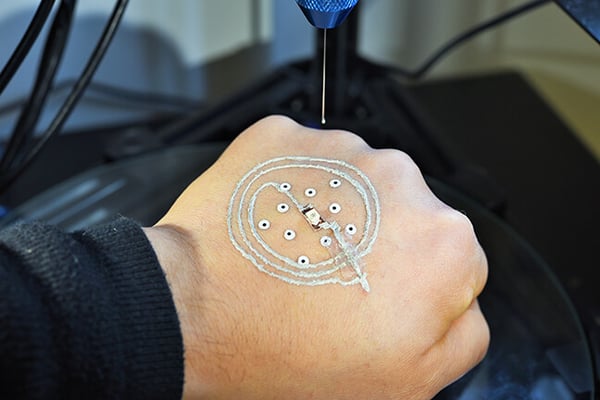
A New 3-D Printer System Can Print Electronics and Cells Directly on Your Skin
For the first time, a team of researchers from the University of Minnesota in Minneapolis developed a customized, low-cost 3D printer that can print electronics on a real hand.

Levitating Objects of Micrometers to Meters by Light
A team of researchers from Caltech highlighted the limitations of some of the existing methods for mechanical manipulation of matter and provide us with new insight for the manipulation method.
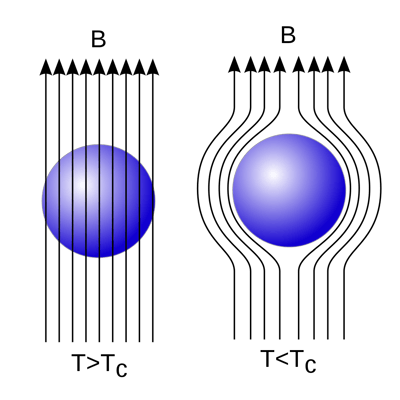
Finally, Scientists Obtained a Novel Approach to Room Temperature Superconductivity Problem
"Instead of increasing the critical temperature (Tc) of a superconductor, the temperature of the room was decreased to an appropriate Tc value...

New Graphene Foam Stays Squishy Even at the Coldest Temperatures
Typical elastic materials made from flexible polymers lose their elasticity at about 55 degrees Celsius. Of course, materials do exist that can handle frigid temperatures without breaking, but elasticity and ductility are generally compromised at these low temperatures.

Generating Electricity Just from Thin Air
Yao and his team designed a device and named ‘Air-gen’ and claimed that it can produce a sustained voltage of around 0.5 volts across a 7-micrometer-thick film, with a current density of around 17 microamperes per square centimeter and the driving force behind this energy generation is the humidity that is naturally present in the air.
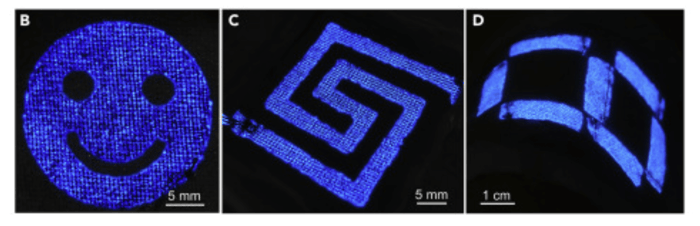
Smart Clothing; You May Shortly Get it in Wearable Appearance
For the first time in history, a team of researchers at the University of Windsor, Canada, used a new approach to create smart textiles with properties, they claimed, soft and wearable. The research along with future consequences was published in the journal Matter, on March 04, 2020.

Now Plants Can Glow
By embedding specialized nanoparticles into the leaves of an aquatic plant species, MIT engineers induced the plants that can give off a dim light for nearly four hours.

New ‘Hot Qubits’ Solved a Major Quantum Computing Problem
The power of a quantum computer will be constrained by the involved cooling process or simply by the coldness at which it is operating. This is because at the extreme cold temperature the electronic components that are required to control the qubits do not work and extreme cold will add additional complications to the system.

New Approach to Unidirectional Photonic Device
Generating a strong unidirectional radiation has always been a challenging task for researchers. In 2013, a team led by Marin Soljačić at MIT used BICs to produce a new type of perfect mirror that could trap and reflect light without ever absorbing it.

'Magnetic Droplets' Have Been Created in a Lab
A team of scientists at the Department of Energy's Lawrence Berkeley National Laboratory (Berkeley Lab) has developed a magnetic liquid that is reconfigurable and shows ferromagnetic character.

Quantum Speedup is Achievable in a Real-world System, Scientists Showed
Classical computers store information with binary code (distinct 0s and 1s and no superposition of the 1 and 0 states) but for quantum computers, this can be 0s or 1s or they can be a superposition of 1 and 0 states.
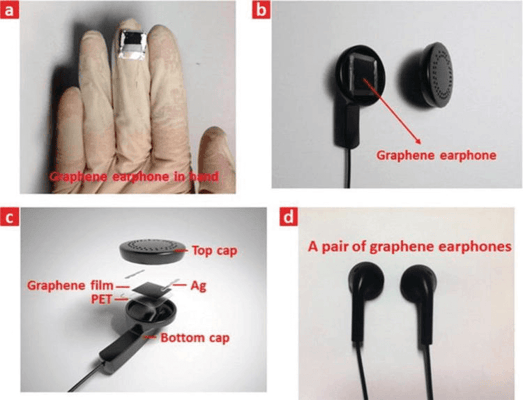
Next Generation Sound Device: Graphene-Based Sound Device
A team of researchers at UC Berkeley and Berkeley Lab found that graphene has mechanical properties that will make it ideally suited for wide-band ultrasonic...

WIFI Signals Turned Into Usable Power Source
A team of physicists at Massachusetts Institute of Technology (MIT) have now devised a blueprint to design a device that would be able to convert ambient terahertz waves,...